|
|
|
|
|
|
|
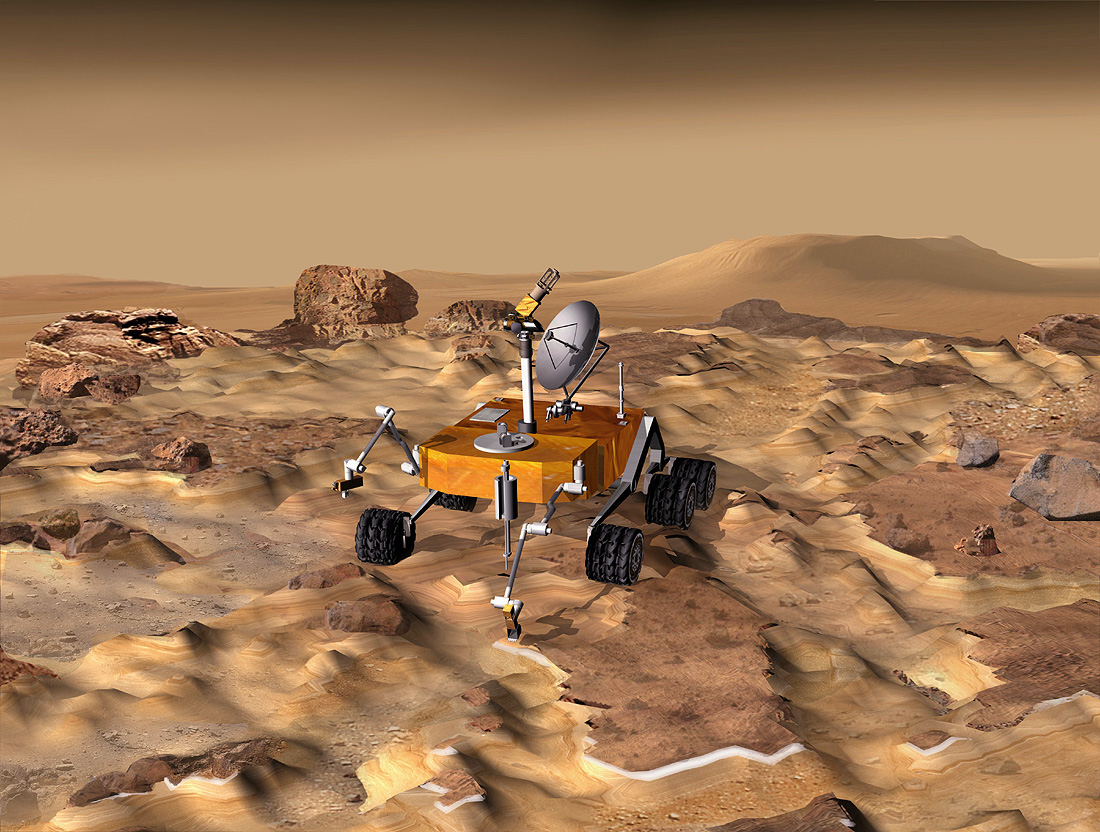
An Astrobiology Field Laboratory (AFL) rover is a mission concept that would conduct a robotic search for life. It would be the first mission since Viking in the 1970s to look specifically for evidence of past or present life. The rover would carry instruments for identifying and measuring the chemical building blocks for life (as we know it), including thousands of carbon-carrying compounds, elements such as sulfur and nitrogen, and oxidation states of trace metals associated with life. It would conduct detailed analysis of geologic environments identified by the 2011 Mars Science Laboratory as being conducive to life. Lately a 2018 or 2020 Mid-Range Rover (MMR) has become a preferred mission candidate instead of AFL. |
|
|
 |
 |